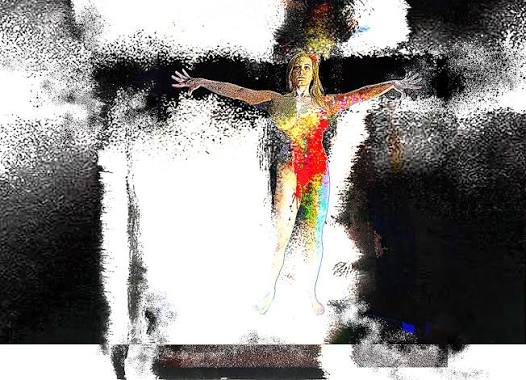
Creating Space on a Flat Screen
A digital image is displayed on a flat surface, but movement can make it feel as though different elements occupy separate spaces. Artists create this impression through layered motion, placing visual elements at different apparent distances and moving them at different speeds.
This technique is common in experimental animation, interactive installations, and digital interface design. It can also be used in casino-inspired artwork, where symbols, light effects, geometric patterns, and background textures often compete for attention.
The Role of Foreground and Background
Depth begins with visual separation. A background might contain slow-moving gradients or large geometric shapes, while foreground elements move more quickly or respond directly to interaction.
When these layers move differently, the viewer receives cues about their relative positions. Objects that appear closer may shift more noticeably, while distant elements move slowly or remain nearly stationary. This effect is often associated with parallax.
For example, an animated composition could place a dark patterned grid in the background, translucent circles in the middle layer, and bright symbols near the foreground. The different movement speeds would help distinguish each layer without requiring realistic three-dimensional models.
Motion Needs a Clear Rhythm
Layered motion becomes less effective when every element moves independently at high speed. Excessive movement can create visual noise, making it difficult to identify the main subject.
A more controlled composition gives each layer a purpose. Background movement can establish atmosphere, middle layers can add texture, and foreground animation can direct attention toward a particular object.
Timing is equally important. Slow transitions can create a calm, immersive quality, while short, sharp movements can make a composition feel energetic. Combining these rhythms carefully gives the artwork a sense of progression.
Designers should also consider how long a viewer will look at the composition. A large digital installation may support slower, more atmospheric movement, while a small screen requires a more restrained approach.
Interaction Adds Another Dimension
Layered motion can become more engaging when it responds to user input. A cursor movement, scroll action, or selected element might trigger a small shift in one layer while leaving the others unchanged.
This creates a relationship between the viewer and the artwork. The composition no longer appears entirely fixed, but it should still behave consistently enough for people to understand the response.
Making Depth Serve the Idea
The purpose of layered motion is not simply to add animation. It is to establish relationships between visual elements and guide the viewer through the composition.
When movement, scale, contrast, and timing work together, a flat screen can suggest depth without becoming unnecessarily complex. In experimental digital art, this balance allows motion to function as both a visual effect and a storytelling tool.


One thought on “How Layered Motion Creates Depth in Experimental Digital Art”